By Lori T, Gilda’s Club member, volunteer, and Ambassador
Treatment done. Or, almost done. You made it through the shock of discovery, treatment, job changes, hair loss and regrowth. Friends and family came by often – in person, by phone, or by texts. Commotion.
But now, cancer is gone – or in (near) remission. Friends and family have mostly returned to their usual activities, and you don’t hear or see from them much. Friends and family no longer expect long answers to the question “How are you?”.
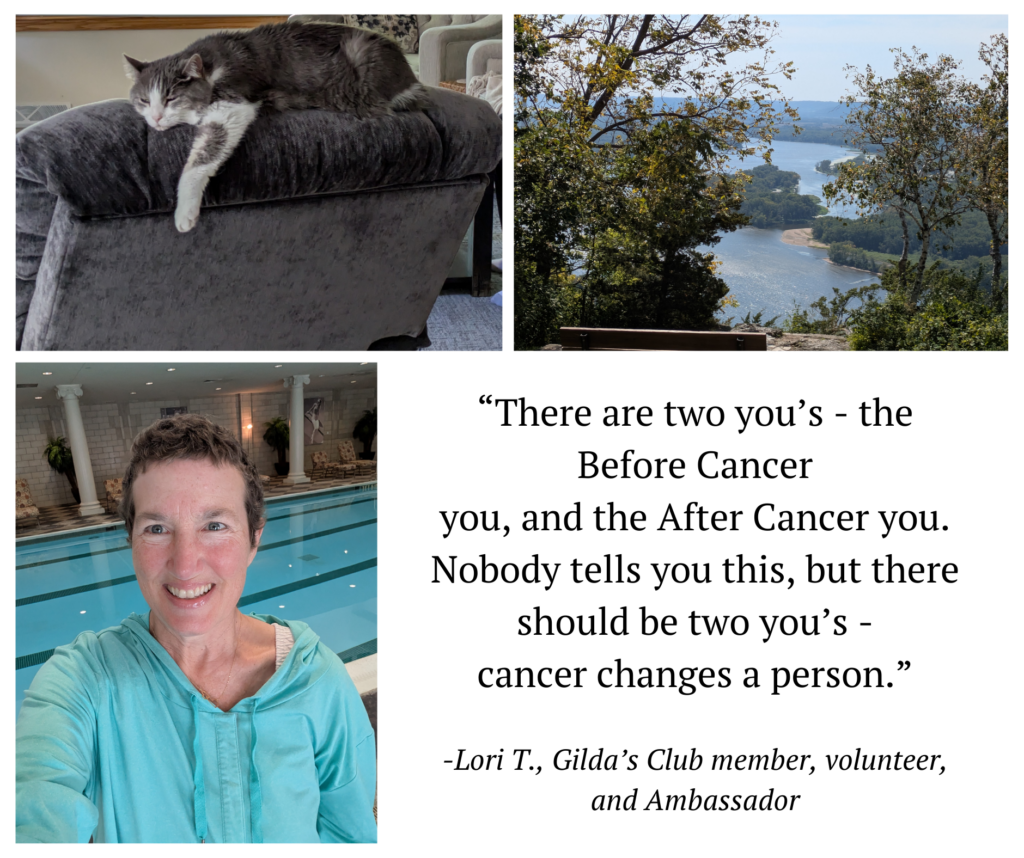
But you don’t feel like you’re “back to normal.” There are two you’s – the Before Cancer you, and the After Cancer you. Nobody tells you this, but there should be two you’s – cancer changes a person. Maybe you were really lucky and your cancer was diagnosed early, removed, with a minimal chance of return. Maybe you weren’t so lucky, and you have a persistent cancer that has changed your body inside and out, and/or there’s a high probability of return. Either way, doesn’t matter. You are still changed.
I think the two you’s are a good thing. Cancer in most cases causes one to reflect more, to slow down, and to see what you see didn’t see as much in the day-to-day busyness of your previous life – the widespread suffering of humanity. In short, cancer can reconnect you to your own humanity with a greater sense of empathy.
I am still trying to figure out how to live now. I used to say, “I don’t want cancer to define me.” But, I realize now, it has defined me. Because of my own pain and suffering, I see suffering in others more clearly. I empathize more. I initiate conversations with people in pain, and in doing that I see a return of life in their eyes; I feel it in mine. A gratefulness in being seen, and a much-needed opportunity to voice their suffering. And for that moment, their suffering is shared with me, mine with them, and our burdens are lightened.
Early on I misled myself in thinking I had to first figure out how to live post cancer. I was wrong. I just have to live each day, one day at a time. The figuring out comes only much later, after the accumulation of all those days and in retrospect.
I’m good with that.
Lori was diagnosed with advanced Multiple Myeloma in 2021 and is an active participant in Gilda’s Club online and in-person programs. Read more about Lori in the blog post “Life is Better with Gilda’s.”